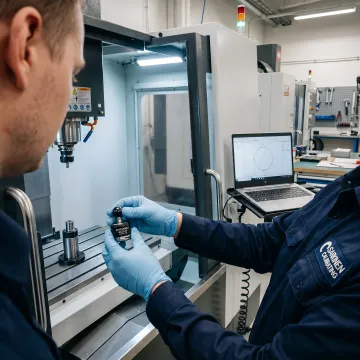
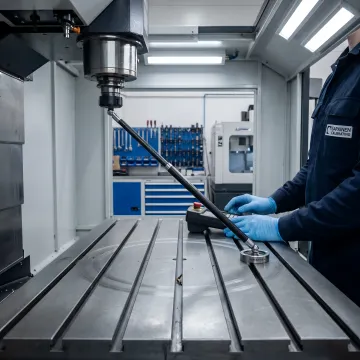
Ballbar testing is a fast, accurate method for evaluating CNC machine performance using a telescopic ballbar mounted between the machine spindle and table. As the machine executes a programmed circular path, the ballbar measures deviations from perfect circularity. These deviations reveal critical issues like backlash, servo mismatch, axis reversal errors, and squareness problems—providing a comprehensive snapshot of machine health in minutes.
How long does ballbar testing take?
Ballbar testing is one of the quickest diagnostic tools available. The wireless Renishaw QC20-W system can complete a full evaluation in approximately 30-60 minutes per machine, depending on configuration. Setup is fast, and testing can often be performed during shift changes or scheduled breaks to minimize production disruption.
What problems can ballbar testing identify?
Ballbar testing identifies backlash, servo mismatch, stick-slip conditions, cyclic errors, axis reversal spikes, squareness errors between axes, and scale mismatch. It also reveals lost motion, mechanical play, and bearing wear. These issues directly affect part accuracy and are often invisible during normal operation until they cause part rejection or quality failures.
How often should I have ballbar testing performed?
Most manufacturers schedule ballbar testing annually as part of preventive maintenance, immediately after machine service or repair to validate work performed, when accuracy problems first appear, before critical production runs, and when relocating or installing equipment. The frequency depends on machine usage, part tolerance requirements, and your quality assurance program.
What's the difference between ballbar testing and laser calibration?
Ballbar testing evaluates dynamic circular performance and interaction between axes, quickly identifying servo and mechanical issues. Laser calibration measures individual linear axis accuracy, straightness, and squareness with extreme precision. Both are complementary—ballbar provides a fast health check while laser offers detailed linear positioning data. Together they deliver complete machine performance verification.
Will I receive documentation of the ballbar test results?
Yes, you receive a comprehensive report documenting all test results with graphical representations of measured circularity errors, specific diagnostic findings, and recommendations for corrective action if needed. All measurements are traceable to NIST and International Standards, providing documentation suitable for quality system audits, ISO compliance, and customer quality requirements.
Can ballbar testing validate work after machine repairs or service?
Yes, ballbar testing is ideal for validating machine performance immediately after service or repair work. It provides objective, documented proof that repairs were successful and the machine has returned to specification. This validation protects your investment and ensures you're not running production on equipment that still has unresolved accuracy issues.
Is ballbar testing required for warranty claims?
While not always required, ballbar testing provides documented proof of machine performance that strengthens warranty claims. Testing new machines while under warranty can identify shipping damage or installation errors before they void coverage. Results create an objective baseline that protects your investment and holds manufacturers accountable to promised specifications.