What does a precision machinist do?
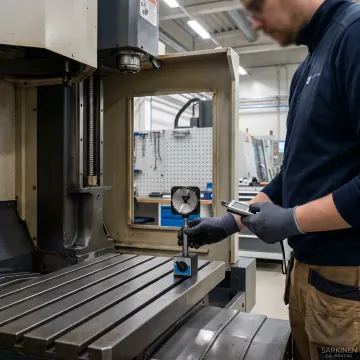
A precision machinist operates CNC machines and manual equipment to create parts with extremely tight tolerances, often to thousandths or millionths of an inch. They interpret technical drawings, select appropriate tooling and cutting parameters, and verify dimensional accuracy using precision measuring instruments. Success requires understanding of materials, machining processes, and the calibration status of both production machines and measurement equipment.
What is an advanced machining process?
Advanced machining processes utilize multi-axis CNC equipment, specialized tooling, and sophisticated CAM programming to produce complex geometries with tight tolerances. These processes often involve 5-axis simultaneous machining, high-speed cutting, or precision grinding. Advanced machining requires properly calibrated equipment with verified accuracy across all axes, rotary components, and measurement systems to consistently meet demanding specifications.
How often should CNC machines be calibrated?
Calibration frequency depends on usage intensity, part tolerances, and manufacturer recommendations—typically annually for most production environments. However, calibration should also be performed after machine relocation, following significant repairs, when accuracy problems appear, or before warranty expiration on new equipment. Regular ballbar testing between full calibrations helps identify developing issues early.
What is NIST traceability and why does it matter?
NIST traceability means measurements are documented through an unbroken chain of comparisons back to National Institute of Standards and Technology references. This provides legal and technical proof that calibration results are accurate and internationally recognized. NIST traceability is often required for ISO compliance, aerospace/defense contracts, and proving to customers that your equipment produces parts within specification.
How long does machine calibration take?
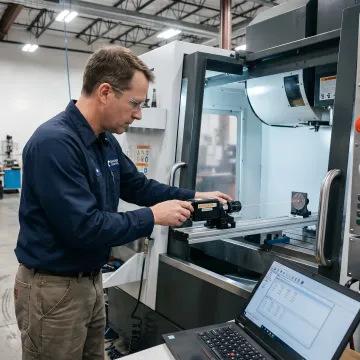
A complete linear calibration with laser interferometry typically requires 4-6 hours per machine depending on size and axis count. Ballbar testing is faster at 1-2 hours. Surface plate verification varies by size. We schedule services to minimize production disruption and can often work during shift changes, weekends, or planned maintenance windows.
Can calibration fix accuracy problems?
Calibration identifies accuracy problems and quantifies their magnitude—correction depends on the root cause. Software-based positioning errors can often be corrected through compensation values. Mechanical issues like worn ballscrews, loose components, or alignment problems require physical repair or replacement. We provide clear recommendations and can verify corrections after implementation.
Do you service machines outside Portland and SW Washington?
Yes, we provide calibration services outside our primary Portland OR and SW Washington service area. However, local customers benefit from significantly faster response times, reduced travel costs, and easier scheduling for follow-up work or emergency service calls. Our proximity allows us to respond quickly when accuracy issues impact production.
What documentation do you provide after calibration?
You receive comprehensive documentation including before-and-after measurements, axis error plots, circularity charts (for ballbar testing), recommended compensation values, and NIST-traceable calibration certificates. This documentation supports ISO requirements, customer audits, warranty claims, and internal quality records. All measurements include uncertainty statements and traceability information.