What are the capabilities of a CNC machine?
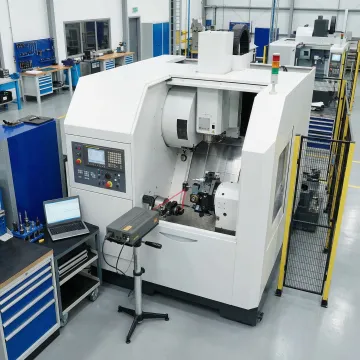
CNC machine capabilities include multi-axis motion control (3-axis, 4-axis, or 5-axis), precision positioning typically to 0.0001" or better, automated tool changing, complex contour machining, and programmable operations. However, actual capability depends on the machine's calibration status—even advanced 5-axis machines lose accuracy over time due to wear, thermal effects, and mechanical drift. Regular calibration ensures your CNC equipment maintains its designed capabilities and delivers consistent part quality.
How often should CNC machines be calibrated?
Most manufacturers calibrate CNC equipment annually, though high-precision operations or heavy-use environments may require semi-annual or quarterly calibration. New machines should be calibrated immediately after installation to verify they meet manufacturer specifications while still under warranty. Additional calibration is recommended after machine relocation, significant repairs, or when part quality issues arise unexpectedly.
What is 5-axis machining precision?
5-axis precision refers to the ability of a CNC machine to maintain accurate positioning across five simultaneous axes of motion—typically three linear axes (X, Y, Z) plus two rotary axes (A and B or B and C). True 5-axis capability allows machining of complex geometries in a single setup, but requires precise calibration of both linear and rotary components. Even small rotary positioning errors are magnified at the tool tip, making rotary axis calibration critical for maintaining overall machine accuracy.
What does NIST-traceable calibration mean?
NIST-traceable calibration means measurement results can be traced back through an unbroken chain of calibrations to standards maintained by the National Institute of Standards and Technology. This traceability provides documented proof that measurements are accurate and defensible, which is essential for quality certifications, customer audits, and maintaining confidence in inspection results. All Sarkinen Calibrating measurements are fully traceable to NIST and/or International Standards.
How long does machine calibration take?
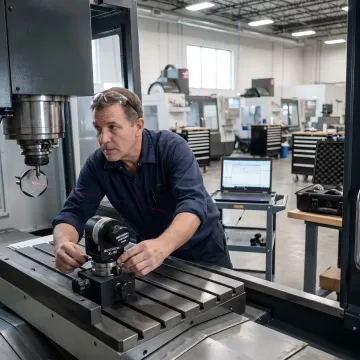
Calibration duration depends on machine size, complexity, and testing scope. A basic ballbar test may take 1-2 hours, while comprehensive laser interferometer calibration of all axes on a large 5-axis machine can require a full day. We minimize production disruption by scheduling work during planned downtime and using wireless measurement systems that allow quick setup. Most calibrations are completed within a single shift.
Can you calibrate machines from any manufacturer?
Yes, our Renishaw laser interferometry and ballbar systems work with CNC equipment from any manufacturer, including vertical machining centers, horizontal mills, turning centers, large gantry machines, and multi-axis equipment. We calibrate machines ranging from small precision mills to large-format CNC routers, regardless of age or control system type.
What reports do you provide after calibration?
You receive a comprehensive calibration report documenting all measurements, pass/fail status against specified tolerances, trend analysis if previous data exists, and specific recommendations for corrective action. Reports include graphical representations of positioning accuracy, straightness deviations, and overall machine performance. All documentation provides the traceability and detail required for quality audits and customer certifications.
Do you service machines outside the Portland area?
While we're based in Portland OR and primarily serve SW Washington, we do provide calibration services outside our core service area. However, customers in Portland, Oregon, and SW Washington benefit from significantly faster response times and reduced travel costs compared to out-of-area providers. Contact us to discuss your location and scheduling needs.